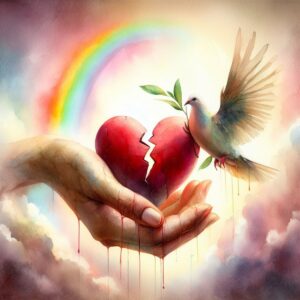

Can we really have peace and joy without trusting God?

Can we really have peace and joy without trusting God?

Christians talk about experiencing God's peace. God's love. The joy of experiencing God's Prescence. And of course, our need for faith in God. But how often do we think about trust? Specifically, for today's topic, can we really have peace and joy without trusting God?
Can we really have peace and joy without trusting God?
...
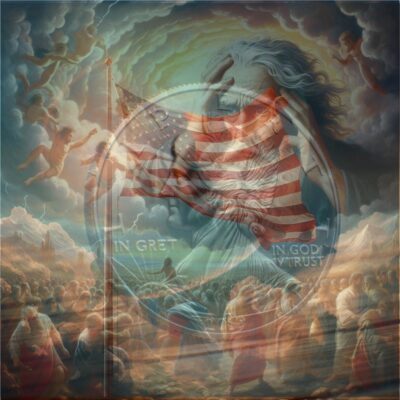
In God we trust. But more so flags and money. illustrated by a U.S. flag overlayed on a U.S. quarter overlayed by God reacting in shock because we use words in God we trust - but not for God.

In God we trust. But more so flags and money.

In God we trust. But do we? We think the U.S. flag represents something of God. We put "in God we trust" on our money. Honestly though - what does either of those have to do with God? ...

Protected:

This content is password-protected. To view it, please enter the password below.

...
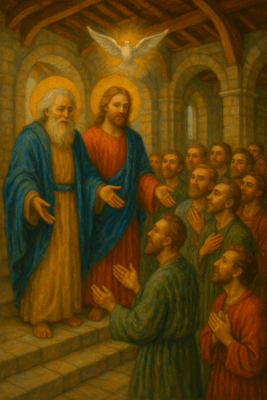
Revelation - Greetings from The Trinity Father, Son, and Holy Spirit to people in a small church in the first century AD

The Trinity in Revelation—Even If the Word Isn’t There

Wait a second. Where did that word Trinity come from? It's not in the beginning of Revelation. Actually, it's not in the middle or the end of it either. In fact, the word isn't in the Bible anywhere. But then, unless you're reading a Hebrew or Greek translation of what ...
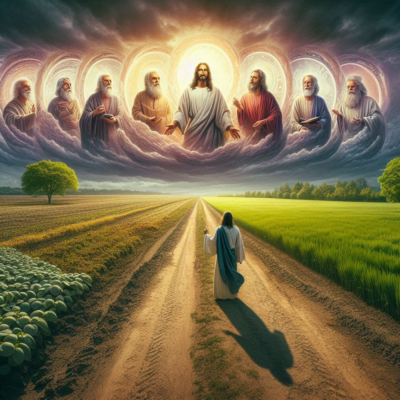
Revelation - greetings to the seven churches

Revelation – The seven churches – Who or what are they?

Revelation is such a dramatic book. An apocalyptic vision. The last days of the earth. But there's so much to understand before "viewing" that revelation. Today, we have movies. Maybe previews or social media videos to get us to watch it. But not 2,000 years ago! Revelation was delivered on ...
Click to show/hide Bible Study Info

Revelation – The seven churches – Who or what are they?” is reflective in nature. The discussion encourages readers to think deeply about the meaning of Revelation, the messages to the seven churches, and how they might apply these insights to their personal faith journey. It does not strictly follow a topical breakdown or an inductive method that examines specific passages systematically. Instead, it invites open-ended interpretation and self-reflection.

Habakkuk asks God a question. God responds with His plan.

God responds to our complaint about His response to our question

So far in this series, we've seen Habakkuk ask God a question. God responds. He actually got an answer from God. But then he didn't seem to like the answer. So now what? Will God strike Habakkuk dead? Will He answer yet again? Or will God maybe turn away in ...
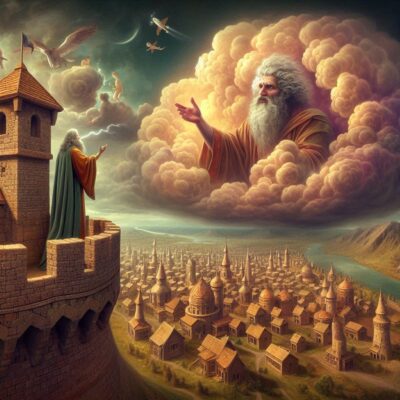
What is the book of Revelation in the Bible?

What is the book of Revelation in the Bible?

What is the book of Revelation in the Bible? Sounds like a weird question. Everyone knows what it is, don't they? But how many of you have read and really figured out the opening sections: the Prologue and the Greeting? For that matter, how many realize there's no "s" on ...

Click to show/hide Bible Study Info

“What is the book of Revelation in the Bible?” is primarily a reflective Bible study. It encourages the reader to deeply consider and understand the true essence and context of the Book of Revelation, its meaning, and its implications for personal faith. The emphasis on understanding the original Greek terms, common misconceptions, and the relevance of the text to one’s own spiritual journey makes it more reflective in nature.

Why should Trump attack on anti-Christian bias worry Christians?

Why should Trump attack on anti-Christian bias worry Christians?
It should worry everyone!

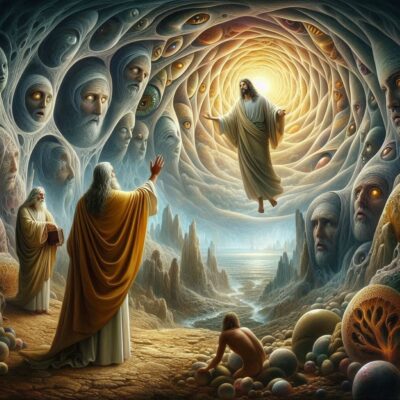
No, that's not a typo in the title. I am really asking "Why should Trump attack on anti-Christian bias worry Christians?" Of course, he'll go after things non-Christians say. But there's something even worse than that. He will also launch attacks on Christians who actually follow what Jesus taught instead ...
Click to show/hide Bible Study Info

Why should Trump attack on anti-Christian bias worry Christians? is a combination of inductive and application Bible study. It examines specific Biblical passages and historical contexts (inductive) and then applies these teachings to contemporary issues, particularly concerning Donald Trump’s comments on anti-Christian bias (application). The aim is to highlight the relevance of Biblical teachings in today’s political climate while encouraging readers to reflect on their faith and actions. It examines specific Biblical passages and historical contexts (inductive) and then applies these teachings to contemporary issues, particularly concerning Donald Trump’s comments on anti-Christian bias (application). The aim is to highlight the relevance of Biblical teachings in today’s political climate while encouraging readers to reflect on their faith and actions.

Dare mightier things - even more than Mars Perseverance Rover

Dare mightier things – even more than Mars Perseverance Rover

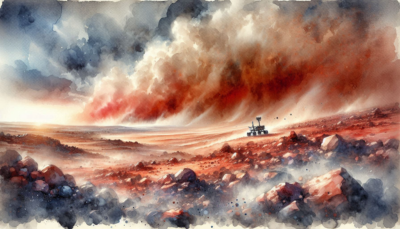
I just watched the landing of NASA's Perseverance on BBC. An amazing accomplishment. Katty and Christian were all excited about it. Everyone they interviewed was celebrating and grinning from ear to ear. As I was watching the people in NASA's control room, I couldn't help but notice some words on ...

Click to show/hide Bible Study Info

Dare mightier things – even more than Mars Perseverance Rover is a reflective Bible study.
It encourages readers to think deeply about their beliefs and how they align with what God says about Himself using the example of the Perseverance Rover mission to draw parallels with spiritual exploration and understanding.
The discussion prompts readers to consider their own spiritual journeys and the concept of “daring mightier things” in their faith.

After reading Augustine quote on Christian faith, the question arises: What is faith? Blind? Circular logic? Or the truth?

What is faith? Blind? Circular logic? Or the truth?
The problem with faith - to believe or not to believe

What is faith? In this specific case, what is Christian faith? People have lots of ideas about that. Some think faith is blind. Others may think the reasoning behind Christian faith is circular logic. Others believe Christian faith is the truth ...

Click to show/hide Bible Study Info

What is faith? Blind? Circular logic? Or the truth? is a mix of reflective and application Bible study, as it reflects on scripture and applies its lessons to real-life questions of faith. It discusses the concept of faith in Christianity. Here’s a summary of the key points:
Nature of Faith: The page explores different perspectives on faith, including views that consider it to be blind, based on circular logic, or the ultimate truth.
Parable of the Sower: It draws parallels between responses to faith and Jesus’ Parable of the Sower, emphasizing different outcomes based on the type of ‘soil’ the seeds of faith land on.
Hebrews and Faith: The author reflects on the book of Hebrews, discussing its authorship and its significance in understanding faith from a Messianic Jewish perspective.
Conclusion on Faith: The page concludes by discussing faith as hope for the future, referencing Romans 8 and the concept of future glory, and challenges readers to consider their beliefs and the implications of faith in God and the Bible.
The study is a mix of reflective and application Bible study, as it reflects on scripture and applies its lessons to real-life questions of faith. It does not strictly follow an inductive or topical study format.

Scroll to Top